
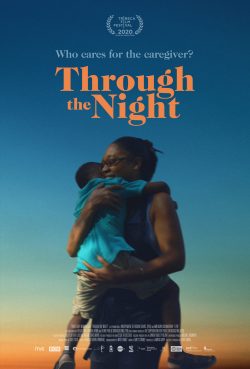
Through the Night: Q+A with Loira Limbal
Six years ago, Through the Night introduced audiences to a 24-hour daycare center and the mothers who relied on it to keep working impossible hours. The film’s social impact campaign went on to help pass one of New York State’s most significant budgets on record.
Now, as NYC rolls out a promised “universal healthcare” expansion, and providers, organizers and elected officials are once again wrestling with who gets left out of that promise, the film is back in the room. We caught up with director and Firelight Media CEO Loira Limbal to talk about what it means to relaunch a campaign six years later, what’s changed, and what hasn’t.
Evergreen: Let’s start at the beginning. You started making Through the Night in 2016, and the world premiere was supposed to be at Tribeca in 2020. What happened?
Loira: We were literally on the first day of color correction when New York City shut down due to COVID. We never made it back for day two. We’d already booked the post house, we were deep into finishing the film, and then, like every other filmmaker that spring, we just had to figure it out.
Q. The film ended up becoming this unplanned portrait of essential workers. How did that happen?
A. That was never the framing when I started in 2016, but it’s what I ended up with. One of the mothers in the film is a grocery and food service worker who worked straight through the pandemic. Another is a pediatric ER nurse who did the same. And Nunu, the child care provider at the heart of the film, along with her husband and family, ran one of the few daycare centers that stayed open, because it’s a 24-hour center serving essential workers. Everyone in that film was living through the exact conversations the country was having in real time.
Q. That first campaign, back in 2020, ended up doing real policy work. What came out of it?
A. We made the film as a love letter to single mothers and caregivers, and our partners turned it into an organizing tool that led to us working with the New York State Legislature. We were a small part of the effort to pass one of the more significant child care budgets in New York State history – $2.4 billion allocated for childcare. Our relationships with the protagonists and the partners are the pieces I’m proudest of.
Q. Fast forward to this year. Why is the film back in the conversation?
A. In January, I got an email from a collective of child care providers and policy organizers in New York City. With the city’s political leadership positioning itself around child care, there’s real momentum right now, but there are also a lot of gaps, and a real risk of repeating mistakes from past attempts. Providers are seizing the moment. There’s political will, but the people at the table don’t always have the full picture, and the folks most affected, low-income New Yorkers and the Black and brown women who make up most of the provider workforce, are the ones most at risk of being left out of the equation entirely.
Home-based child care is highly skilled, deeply sophisticated, and for the women at its center, a genuine calling.
Loira Limbal
Q. Tell us about the screening at The New School this past May.
A. It was packed. Providers came from all over the city, alongside a few folks from the mayor’s administration and representatives from the UFT’s child care arm. Parent organizers showed up too. We wanted to build a moment that felt like a celebration, not a policy panel. There was food, music, a little makeshift red carpet in the lobby. People came dressed up. It felt like an affirmation of something we already knew: watching a film together, in a room, is a completely different experience than watching it alone on your phone. Because we finished this film in the middle of the pandemic, almost everything we did with it early on was virtual. That May screening was the first time we really got to see what this film could do in a room full of the people it’s actually about. It was framed as the providers’ event, and elected officials were invited into that space rather than the other way around, which also happens to work well for them, because they’re always looking for a good photo. But the point was honoring the women and the labor at the center of the film, on their terms.
Q. The film pushes back on how home-based providers are usually talked about. Can you say more about that?
The child care conversation tends to favor institutional centers and credentialed teachers. Home-based providers, especially Black and Brown immigrant women caring for children out of their own homes, are constantly viewed through a deficit lens: unskilled, informal, less-than. The film does the opposite. It shows that this work is highly skilled, deeply sophisticated, and for the women at its center, a genuine calling.
Q. Where can people watch Through the Night now?
A. We made the decision not to renew the Amazon Prime deal. This is a film about late-stage capitalism, and it didn’t sit right keeping it on a platform like that for the long term. It’s moving to Kinema, if people or organizations want to host their own screenings. It will also be on the Criterion Channel starting August 1, 2026.
Q. What’s next for the campaign?
A. We’re planning a few marquee events aimed at getting the right people in the same room, including a possible screening in Puerto Rico at a conference where much of New York’s political establishment shows up. We’re also in fundraising mode. One idea with a lot of energy behind it right now is a citywide visual campaign, something like a Humans of New York for child care providers, potentially on city buses, to make this workforce visible in a totally different way.
Q. Anything you want people to take away from where this film is now, six years later?
A. That these stories have long lives. This film came out years ago, and people are still activating it today toward goals we never could have predicted. That’s the case for a lot of documentaries: they’re worth investing in even when the impact isn’t immediate, even when the distribution deal falls apart. If you’re thinking about this from a philanthropic lens, the return isn’t the point. The impact, the years or generations it can touch, is.

An ecosystem where artists bring stories to life, funders believe in the power of stories, and partners connect audiences with stories.
Request invitation to join the 3Roots Community to receive updates on upcoming events, select film opportunities, and our newsletter!
For questions or inquiries, we would love to hear from you at Contact@3Rootsmedia.com