
Finding Má: Q+A With Thanh Tran
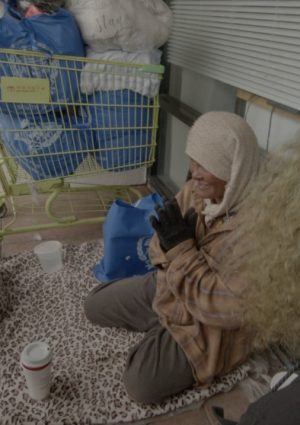
Finding Má Director Thanh Tran taught himself filmmaking inside San Quentin, first as a tool for organizing against the deportation of fellow incarcerated people, then as a way to document his own life. Finding Má follows Thanh’s reunion with six of his seven siblings and his mother after 20 years of separation, shaped by foster care, incarceration, addiction, and homelessness. We spoke with him about the film and what it means to choose love again and again, even when it’s the harder path.
Evergreen: What made you decide to start filming your own story in 2021?
Thanh: I came to filmmaking very untraditionally, as an organizer inside San Quentin, fighting to stop the deportation of friends who’d served decades, proved they’d changed, and were still getting snatched by ICE right at the gates. A good friend told me if I wanted to be an effective organizer, I had to use every tool available. There was a closet full of cameras at the prison that almost no one knew how to use. He said, go teach yourself film, teach the rest of the population, and make films about us. Get us out of prison.
My first film was terrible, honestly, but it lit a fire under me. I kept going, made about ten short docs while I was inside. By 2021, word was starting to spread that my sentence might be reduced, and my fellow filmmakers inside were like, ‘Thanh, you’re always telling people how much power people’s stories have. When will we hear about your story? You might go home any day now. If you don’t start filming now, you won’t have any footage inside. You’re not going to have this moment ever again.’ That’s what pushed me to start.
I was released on May 11, 2022. We filmed the biggest moments of that first year at home: my foster moms, my biological mom, my first Thanksgiving, reuniting with six of my seven siblings after 20 years apart.
Q. You’ve spoken about wanting to avoid the exploitative tropes you saw in other prison documentaries. What did you want to do differently?
I watched filmmakers helicopter into the prison and promise incarcerated people fame, freedom, money, for participating in their projects. What I saw instead was people getting cheated, sometimes getting more years added to their sentence because of how they were misrepresented. When I first picked up a camera, the question was how do I use this medium for the liberation of my people. When I started this project, the question changed: how do I use this medium to facilitate the empowerment and healing of my broken family?
That shaped the look of the film too. As an incarcerated film team, we always pushed back on the idea that being in prison meant we had to make prison films, full of the usual bars-and-walls imagery. We were constrained to talking-head interviews inside, and it drove me insane. When I came home, I said: minimal talking heads, please. If possible, zero.
It's easy to fall into learned helplessness when you're in an impossible situation, but we still have choices, even when they're hard ones. More often than not, that choice is: either we choose love, or we don't.
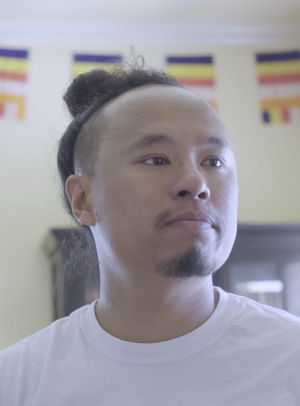
Thanh Tran
Q. Two of your siblings are now part of the crew. What has it meant to make this film alongside your family, rather than about them?
A. My brother, who was already a cinematographer, came on as our director of photography. My sister joined in a dual role, associate producer and community care coordinator, and that second title isn’t just a nice phrase. Her real job is what happens when the cameras aren’t rolling: making sure our mom, who we found in a really vulnerable state, is actually being cared for. Getting her to doctor’s appointments. It took four years to rebuild enough trust with her to get her diagnosed, medicated, her social security reactivated.
From day one I told my family: I might have my foot on the gas, but you always have the foot on the brakes. Any moment you feel uncomfortable, or don’t like something I’ve filmed, tell me and we’ll get rid of it. I’d rather have my family than a documentary. They’ve used that brake a few times, and they’re still in every story meeting, every cut screening, all the way through post.
Q. The film moves through foster care, incarceration, addiction, and homelessness. What do you want audiences who haven’t lived through these systems to understand?
A. I definitely want people to understand these systems are alive and well, and they’re actively tearing families apart. But I also want people to know we’re not powerless against them. It’s easy to fall into learned helplessness when you’re in an impossible situation, but we still have choices, even when they’re hard ones. More often than not, that choice is: either we choose love, or we don’t.
My own family is an example. We were separated as kids and raised in really different households: different faiths, different politics. When we reunited, we could have easily written each other off. Instead we chose to see each other as people who’d been shaped by circumstances none of us picked, and to let love be the bridge we walked across instead.
Q. What do you hope people do after watching?
A. I want people to bring someone with them, a parent, a sibling, whoever this might stir something loose for. At our work-in-progress screenings, that’s already happening. Someone came up to me after one and said, ‘my mom isn’t living on the streets, and I haven’t talked to her in five years over a petty argument, I’m about to call her after this.’ That’s exactly what we need, especially during these times, right? When families are being ripped apart, when communities are being pitted against each other, the biggest line of defense we have against that is each other.
Q. What’s next for Finding Má, and how can readers support it?
A. We wrap post-production this fall and we’re submitting to Sundance. I’m building impact partnerships with Represent Justice, Working Films, the Sundance Documentary Fund, New Breath Foundation, and a few others, and right now I’m focused on raising the impact funds to actually bring the film to the communities it’s about. People can support us through the donation link on our website, sign up for our newsletter, or follow along at @FindingMaFilm on social media.
An ecosystem where artists bring stories to life, funders believe in the power of stories, and partners connect audiences with stories.
Request invitation to join the 3Roots Community to receive updates on upcoming events, select film opportunities, and our newsletter!
For questions or inquiries, we would love to hear from you at Contact@3Rootsmedia.com