
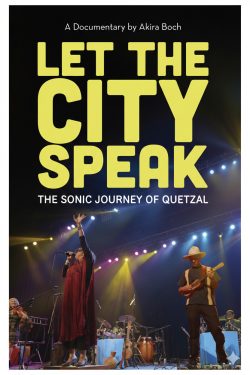
Let The City Speak: Q+A With Akira Boch
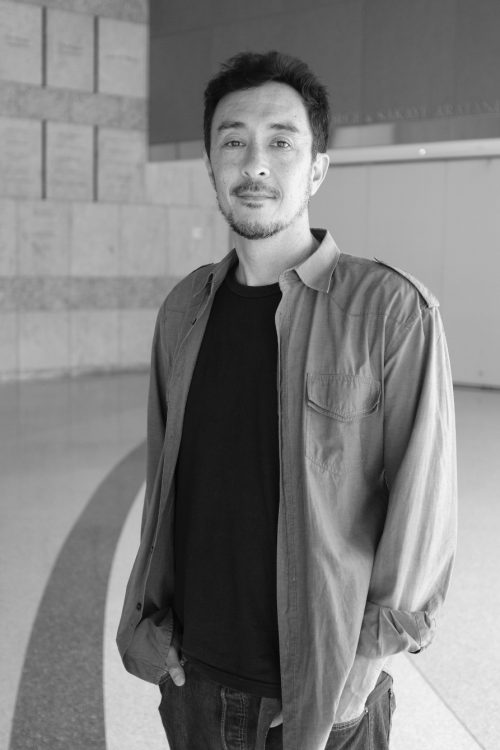
Akira Boch is an Emmy-winning filmmaker who grew up immersed in politically rooted artistic performance and spent 30 years documenting the East LA music scene. Let the City Speak is the result of that journey. We spoke with him about the film and what he hopes it will inspire.
Q: Tell us about the film and what drew you to make it.
It’s about Quetzal, a Chicano rock band from East Los Angeles that I’ve had a relationship with for over 30 years. From the very beginning I recognized they were special. Not only are they extremely talented, but they have very relevant messages that have always been ahead of the curve politically and socially. They worked with record labels early on, then walked away because it wasn’t aligned with their values. They went independent, kept making music, and in 2013 won a Grammy. To me, that proved you could build a career entirely outside the industry and still be recognized for it.
Q: How did the film come together?
I’d been collecting footage since 1994: live shows, interviews, music videos, without knowing what I’d do with it. It wasn’t until the pandemic that we got on Zoom and I started to see the shape of a story. One thing Quetzal Flores was clear about from the start: he didn’t want the film to center the band. He wanted to honor the community the band came from. That was a challenge, but it also made sense because I had footage of so many other East LA artists. Quetzal became the through line, but the film is really a portrait of a whole music and art community. I definitely see this as a social justice music documentary.
Q: What’s your background, and how did you find your way to East LA?
I grew up in San Juan Bautista, right next door to El Teatro Campesino– Luis Valdez’s Chicano socio-political theater company. So I was steeped in politically and culturally rooted work from a young age. When I moved to LA in 1994 and landed in the East LA music scene, it felt completely natural. I went to UCLA Film School, kept making documentaries and narratives, and started making music videos for local bands. It was a natural progression.
Q: How has the film been received so far?
We premiered March 7th at the Aratani Theater in downtown LA, a 700-seat venue that both Quetzal and I have a personal connection to. I got so much positive feedback for it– people felt like it was their story. You know, they felt seen. It was a real labor of love putting this thing together, so it was a huge reward for me, finally, to be able to get that kind of feedback from the community that I made the film for. We ended the night with a fandango outside. People brought instruments, and it turned into a big party. Since then we’ve screened at universities including UC Berkeley, Stanford, and UC Santa Cruz; film festivals in LA, Seattle and San Diego, with more college screenings planned for the fall.
American society programs people to believe the industry path is the only path to “success”. Quetzal is a clear model that it isn't. You can retain your artistic integrity, perform on big stages, win Grammys, and use your talent to actually help your community.
Akira Boch
Q: Who do you hope watches this film, and what do you hope they take from it?
Young artists, first and foremost. American society programs people to believe the industry path is the only path to “ success”. Quetzal is a clear model that it isn’t– that you can retain your artistic integrity, perform on big stages, win Grammys, and use your talent to actually help your community. But honestly, even if you’re not an artist, I think the main takeaway is just: live with clear principles. That message has resonated with people of all ages at every screening we’ve done.
Q: What do you need right now to keep the film moving?
We’re not online yet, and that’s intentional. Every screening has become a tool to bring people together in real life, with Q&As, fandangos, and eventually, we will have the band performing. The film is a tool to bring people together, to connect and inspire each other. We want that to play out before we go digital. What we need are more screening partners: universities, festivals, community organizations– and eventually someone with connections to online distribution. If any readers have that capacity or want to host a screening, we’d love to hear from you. Email contact@3rootsmedia or visit letthecityspeak.com to learn more.
An ecosystem where artists bring stories to life, funders believe in the power of stories, and partners connect audiences with stories.
Request invitation to join the 3Roots Community to receive updates on upcoming events, select film opportunities, and our newsletter!
For questions or inquiries, we would love to hear from you at Contact@3Rootsmedia.com